

An Introduction to the
History & Philosophy of Yoga
Academically rigorous. Actively Contemplative. Practically Inspiring.
For yoga teachers & curious practitioners ready to understand yoga’s roots and discover what authentic yoga philosophy means in your practice, teaching and life.
Signature programme
If you...
➤ Feel curious about yoga beyond the physical and want to understand its history and philosophy in a way that is clear, accessible, and genuinely inspiring., without fear of “getting it wrong,” offending, or blindly repeating ideas you don’t fully understand.
➤ Have completed your 200-hour training, yet sense a disconnect between the philosophy you’ve been taught and what feels meaningful and alive in your own practice, teaching and life.
➤ Are seeking context and guidance to make sense of where different yogic practices come from, what they were originally for, and how they might be understood and made relevant today, in your own life.
...then this course is for you.


Why study the History and Philosophy of Yoga?
The truth is, there is no single yoga philosophy and no one “right” way to integrate it. Yoga has always changed, and continues to do so. This is why we must study the history and philosophy of yoga:
-
To build a conceptual “map” of yoga’s evolution
-
So grounding and naunce replaces confusion & overwhelm
-
To be freed from the pressure to be “right.”
-
To cultivate active, ongoing enquiry & open ourselves to all the beautiful diversity of what yoga can be.
-
To become active seekers ourselves, initiating more deeply into the mysteries of yoga
In doing so, yoga philosophy transcends abstract theory to become a living practice and way of life.
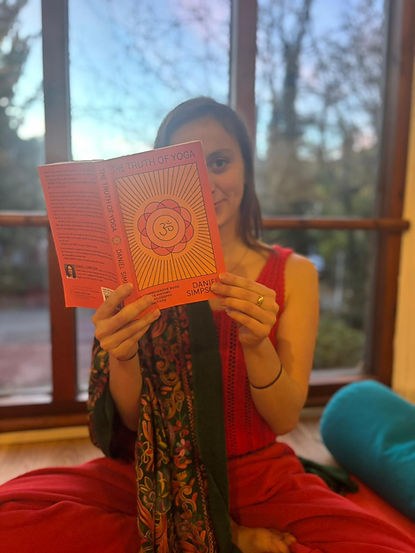

Yoga philosophy as a practice & ways of life helps us live richer & more meaningful lives.
Like the ancient yogis and mystics, we must remember the true purpose of philosophy: not to arrive at final answers, but to ask questions. Questions that allow us to engage more deeply with our world, practices and life.
By building a map of yoga's evolution, we can begin to situate ourselves as modern practitioners, finding a deepened connection to yoga's past, and a more authentic relationship to yoga in our own lives as we ask - what does yoga - and life - mean for me today? How can the diverse and ancient traditions of yoga aid my journey? And where might my own views, values and goals differ from some the ideas I come across?
On this journey, there is no ‘final’ answer. Rather, it is an ongoing practice of enquiry; one that deeply enriches our lives and sense of purpose.


.png)


This course's approach:
This course is not like the majority of other philosophy and history of yoga courses, which focus on abstract ideas and dry history without integration or reflection on modern life and yoga practice.
Instead, underpinned by the ancient and premodern view of philosophy as a practice and ways of life, this course combines rigorous academic research on the philosophy and history of yoga with philosophy as a practical and active enquiry - one that helps us reflect on and through the past, in order to find more value and meaning in the present.
You do not have to be an experienced philosopher to join this course. A curious and willing attitude is all that is needed, as this course will introduce you to the fundamentals in an accessible, engaging and relevant way. Such concepts include:
The Goals of Practice
Also known as 'soteriology' - the philosophy of the goals of spiritual and religious practice.
Underlying Visions of Reality
Also known as 'soteriology' - the philosophy of the goals of spiritual and religious practice.

The Role of Tradition
What is the role of tradition in the evolution of yoga, and what about today?

Hear more about the course from Floss
This is what makes this course unique - and is why this approach is needed more than ever
In a post-lineage age of yoga — where traditional hierarchies are being questioned — many of us are searching for a deeper, more grounded spiritual connection. This course responds to that call, blending rigorous scholarship with personal reflection to help you understand yoga’s complex history and philosophy. All backgrounds are welcome, as long as you come with curiosity, openness, and a desire to dig deeper.

.png)
What does this course include?
-
6 pre-recorded video lectures — approx. 1-1.5 hours each, to explore key topics at your own pace and build a conceptual map of yoga's history & philosophy.
-
Course Handbook — filled with reflective course highlights and journal prompts to help you consolidate knowledge in relation to your own life & practice.
-
Suggested Reading list & guide — to further your knowledge & enquiry beyond the course with topics that interest you.
-
Contemplative, Reflective Prompts — to inspire you to take your learnings into your own life, creating meditations and practices for your own life and teaching.
Signature programme
By the end of this programme you will...
➤ Have an academically-grounded understanding of yoga's historical, philosophical evolution - from pre-Vedic times to the Modern day, including an awareness of the debates around this history.
➤ Been introduced to the ancient idea of philosophy as a way, the different branches of philosophy (and why they are very relevant today) and sacred yogic texts.
➤ Have reflected on what yoga means in your life, and have discovered new paths of exploration and inspiration on your own spiritual journey.
➤ If you are a yoga teacher, have a transformed understanding of yoga's evolution, the emergence of modern yoga (& the yoga you teach) and more clarity around your philosophies and values - and how they will be expressed in your teaching.


Floss has a fantastic depth of knowledge and clearly is incredibly passionate about the subject matter. I liked the combination of individual study combined with group discussion. The discussion allowed for deeper reflection and exposure to other viewpoints. Exposure to key philosophical concepts like the idea of soteriology also really helped to build context when considering how yoga has changed over time.
— Rosie, Yoga Teacher, London


Floss dives deep into the philosophy and history of yoga in a way that I haven’t experienced elsewhere. Not only does she eloquently present the course material, weaving history, theology, philosophy. I have learnt far more on this topic from this course than in my yoga teacher training and would recommend it to anyone teaching or practising yoga who is looking to deepen their knowledge
— Nathalia, Yoga Teacher, Cambridge
About your teacher and facilitator | Floss Harry
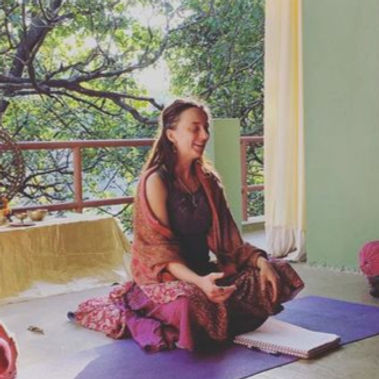
Hi, I’m Floss—yoga teacher, philosophy facilitator, and scholar-practitioner with a Masters in the Philosophy of Religion and Sanskrit from the University of Cambridge. I am passionate about reconnecting yoga philosophy with life, where theoretical study and embodied practice go hand in hand; both helping us live better and more fulfilling lives.
I am dedicated to creating spaces for yogis to engage with yoga’s history and philosophy in a way that is academically grounded, personally meaningful and spiritually rich.
I’d love to welcome you into this space of learning and enquiry. Any questions? Just reach out.
Lectures:
The main content of the course is delivered through six pre-recorded lectures, which you can watch or listen to in your own time. These lectures are designed to give you a rich, engaging introduction to key moments and ideas in the history and philosophy of yoga—from its ancient roots to modern developments. Each lecture is around 90 minutes long and accompanied by optional reading suggestions, reflection prompts, and occasional short quizzes to help you digest and integrate the material.
_edited.png)
_edited.png)
Lecture outlines:
Each lecture explores a different theme or period in the history and philosophy of yoga. Together, they build a picture of yoga as a diverse, evolving, and often contradictory tradition—inviting reflection, curiosity, and critical engagement, as we build a conceptual map of yoga's history and philosophy.
Lecture 1: What Is (Yoga) Philosophy?
We begin by asking what we mean by 'philosophy'—in yoga and in life. You'll explore different ways of thinking about knowledge, liberation, and practice.
Lecture 2: Ancient Yoga – The Vedas, Upaniṣads & Early Concepts
A deep dive into some of the earliest Indian texts that shaped yogic worldviews: ritual, renunciation, liberation (moksha), and the Self (ātman).
Lecture 3: Classical Yoga – Patañjali and the Eight Limbs
Unpacking the Yoga Sūtras, dualism, the eight limbs (aṣṭāṅga yoga), and how this shaped later ideas of practice and purity.
Lecture 4: Beyond Patañjali - Evolving Visions of Yoga, Dharma, and Liberation
Explore how Indian philosophy reimagined yoga after Patañjali—through devotion, action, and non-duality. This lecture dives into the Bhagavad Gītā, Advaita Vedānta, and the Laws of Manu to trace evolving answers to timeless questions about self, duty, and liberation.
Lecture 5: Medieval Developments: Tantra, Hatha and the Body as Sacred
Explore non-dual Śaiva Tantra, embodied liberation, subtle body maps (like kuṇḍalinī and chakras), and their influence on modern yoga.
Lecture 6: Colonialism, Orientalism & Yoga Today
How yoga was reshaped under colonial rule—through nationalism, Western interest, and the invention of modern postural yoga. We also explore contemporary currents: the rise of post-lineage yoga, decolonial thought, trauma-informed practice, and the - should what we practice today even be called yoga?


Floss creates much-needed spaces for yoga teachers and practitioners to share, enquire and discuss from a place of curiosity. She is wonderful at creating an inviting, comfortable, atmosphere in the way that she gently facilitates her sessions."
— Elene, Yoga Teacher, London


In my practice this new knowledge helps me feel part of something bigger than just turning up for class and I have a much more profound sense of purpose and practice of yoga as a way of living, not just an exercise class of asanas.
— M, Yoga Student, UK
"Studying the philosophy and history of yoga is essential. Not just to know about yoga’s development, though this is important. But to deepen our understanding and exploration of yoga, philosophy and spirituality personally in our own lives; reflecting on the past, and enquiring in the present. This is crucial work for spiritually-minded yoga teachers and practitioners alike who are ready to take the next step of deepening on their journey. This course provides a well-needed space and community for that enquiry."
Floss harry

Pay in One
439
Pay in one instalment of £439
Valid until canceled
Join the course today
Frequently Asked Questions (FAQs)